
Central Heating Installation Across EssexRadiators Sized, Piped and Balanced ProperlySo Every Room Actually Reaches Temperature
A central heating system is only as good as the pipework, radiator sizing and controls behind the boiler — get those wrong and you get cold rooms, noisy pipes and a system nobody can balance. FHP Heating designs the system to the property's actual heat loss, fits it first-fix to second-fix, cleanses and inhibits it properly, and agrees one fixed price before any pipe is cut.
Gas Safe Register No. 6075146 · G3 unvented cylinder qualified · 12-month workmanship guarantee on every install.
6075146
Gas Safe Register number
22 years
In the heating and plumbing trade
G3
Unvented cylinder qualified
£2 million
Public liability insurance
24/7
Phone answered, seven days a week
A heating system designed room by room, not guessed at
Central heating installation is the design and fitting of the pipework, radiators, controls and hot water storage that move heat from the boiler into every room of a property. That covers first-fix pipe runs in a new extension, a full rip-and-replace of an old system, or bringing a half-finished refurbishment up to a working, balanced standard. FHP Heating carries out domestic and commercial installations across Essex, from single-room additions to whole-house systems.
What the work actually involves
Calculating heat loss room by room, sizing radiators and pipework to match it, running first-fix pipework in new or exposed floors and walls, hanging and connecting radiators with TRVs, fitting zone valves and a programmer or smart control, connecting a cylinder where hot water storage is needed, then chemically cleansing, dosing with inhibitor and balancing every radiator so the whole system heats evenly.
Who it is for
Extensions and loft conversions that need new radiators and pipework tying into the existing system, whole-house refurbishments where the old system is being stripped out anyway, self-builds needing a system from scratch, landlords bringing an unheated or poorly performing property up to standard, and anyone replacing gravity or single-pipe systems that never heat evenly.
When it is needed
When rooms are consistently cold despite a working boiler, when radiators are the wrong size for the space they are in, when an extension has been added without extending the heating properly, when a renovation has stripped floors and walls anyway so pipework should be redone while it is open, or when a system is old single-pipe or microbore pipework that cannot support modern radiators or controls.
Why correct sizing and a Gas Safe engineer matter here
A radiator that is too small for a room will never reach temperature no matter how hard the boiler works, and a system with pipework undersized for the flow rate will be noisy and slow to heat. Heat loss calculation, correct pipe sizing and proper balancing are what separate a system that works from one that is merely installed. Where the work connects to gas appliances or unvented cylinders it is also notifiable work, carried out here under Gas Safe registration 6075146 and G3 unvented cylinder and Water Regulations qualifications.
A system fitted without proper sizing never heats right, whatever you do to the boiler
Most cold-room complaints have nothing wrong with the boiler at all. The fault is in radiators that were never sized to the room, pipework that cannot carry enough flow, or a system nobody balanced after it was fitted. No amount of boiler servicing fixes any of that.
Rooms that never reach temperature
An undersized radiator, or one fed by pipework too small for the flow it needs, will plateau below the temperature you want no matter how long the heating runs or how high you turn the thermostat.
One end of the house robbing the other
Without proper balancing, radiators nearest the boiler run hot and fast while the far end of the system barely gets warm. That is a balancing and pipework design fault, not something a new thermostat will solve.
Noisy pipework and banging radiators
Undersized pipe runs, trapped air, and pumps working against a badly designed system show up as kettling, banging and gurgling — symptoms of a system fighting its own design.
Extensions that never got proper heating
A radiator added to a new extension off the nearest existing pipe run, without checking whether that run has capacity, is a common way for a new room to end up permanently under-heated while the rest of the house is fine.
Sludge and corrosion building unseen
A system installed without a chemical cleanse and inhibitor dosing starts corroding from day one. Debris settles in radiators and blocks valves years before it becomes visible as a cold patch or a failed pump.
Unvented cylinder work done without G3 qualification
Unvented hot water cylinders are notifiable installations with specific safety devices required by law. Installed or serviced by someone without the G3 qualification, a fault can mean pressure relief devices that do not work as they should.
Mistakes that make the bill bigger
- Sizing radiators by eye or by what was already in the room, rather than by calculating the room's actual heat loss.
- Extending pipework from the nearest existing radiator run without checking it has the flow capacity to serve another room.
- Fitting TRVs on every radiator including the one the room thermostat is calling from, which stops the system calling for heat correctly.
- Skipping the system cleanse and inhibitor dose because the pipework and radiators are new, when new steel corrodes exactly the same as old.
- Zoning heating and hot water incorrectly so both call for heat together when they should be independent, wasting fuel and slowing recovery.
- Using unqualified labour on an unvented cylinder connection, which is both a legal and a safety problem.
Five stages from heat-loss survey to a balanced, working system
Central heating installation touches every room in the property, so the sequence is planned before anything is opened up, and confirmed with you at each stage.
-
STEP 01
Heat loss survey and design
Every room is measured and assessed for heat loss — wall construction, glazing, insulation and room use — so each radiator is sized to actually heat the space it sits in, not guessed at from what was there before.
-
STEP 02
Specification and fixed price
You get a written specification of radiator sizes and positions, pipework routes, controls and zoning, plus cylinder requirements if hot water storage is part of the job, with one fixed price agreed before any work starts.
-
STEP 03
First-fix pipework and containment
Pipe runs are installed through floors, walls and ceilings while they are open, radiator positions marked, and containment run for controls wiring, ahead of plastering or floor coverings going back down.
-
STEP 04
Second-fix, cleanse and commission
Radiators, TRVs, zone valves, cylinder and controls are connected and finished, the system is chemically cleansed and dosed with inhibitor, then every radiator is balanced so heat reaches every room at the rate it should.
-
STEP 05
Handover and guarantee
Controls are demonstrated, a job report is issued covering what was fitted and how the system is zoned, and the installation is backed by our 12-month workmanship guarantee.
What a properly designed system buys you
The value of a well-designed heating system shows up every day it runs — in rooms that reach temperature, in bills that reflect heat you actually use, and in a system that does not need constant intervention.
Every room actually heats
Radiators sized to real heat loss, not guesswork, so bedrooms, extensions and awkward rooms reach the temperature you set rather than plateauing short of it.
A system that balances evenly
Correct pipe sizing and a proper balancing pass mean the far end of the house heats at the same rate as the end nearest the boiler.
Zoning and controls that work together
TRVs, zone valves and thermostats set up correctly so heating and hot water run independently and rooms can be controlled separately where it matters.
Protection from day one
Chemical cleansing and inhibitor dosing on every install, new system or old, so corrosion and sludge are not building up unseen from the first winter.
Compliant cylinder work
Unvented cylinder installation and connection carried out under G3 and Water Regulations qualifications, with the safety devices fitted and tested as the law requires.
One fixed price for the whole job
First-fix, second-fix, cylinder, controls and commissioning all covered by the price agreed after the survey — no separate invoices appearing as the job progresses.
Central Heating Installation jobs completed across Essex
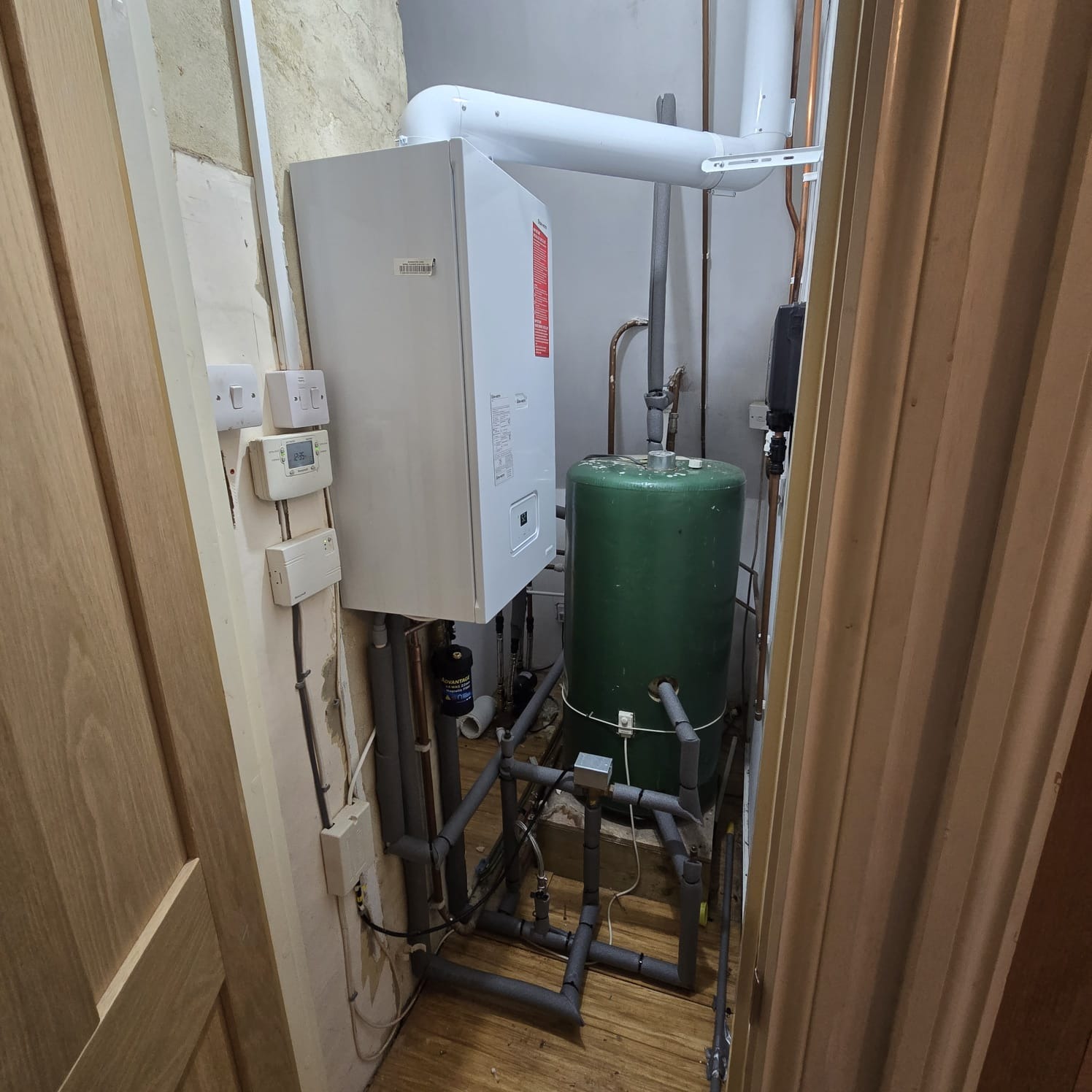
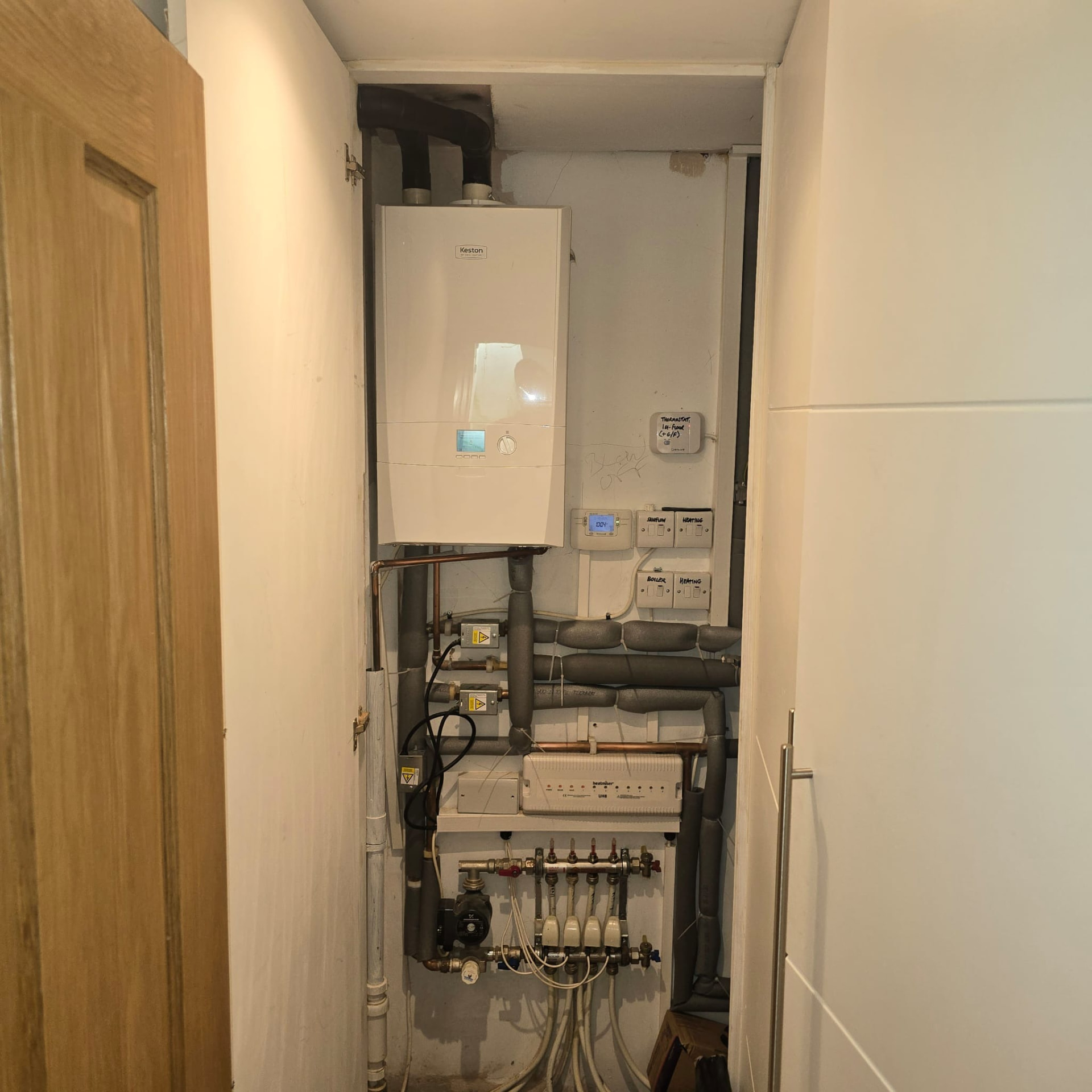
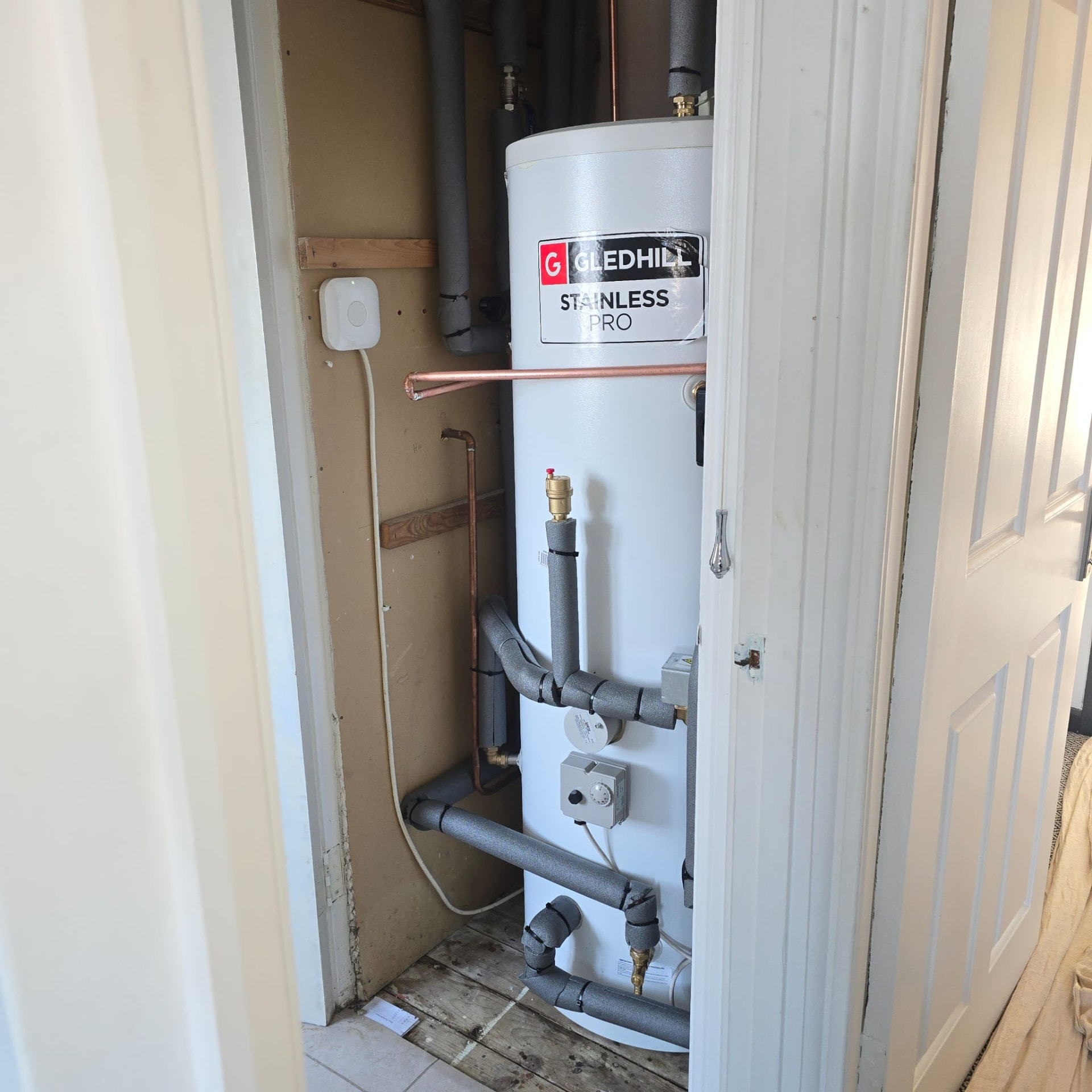
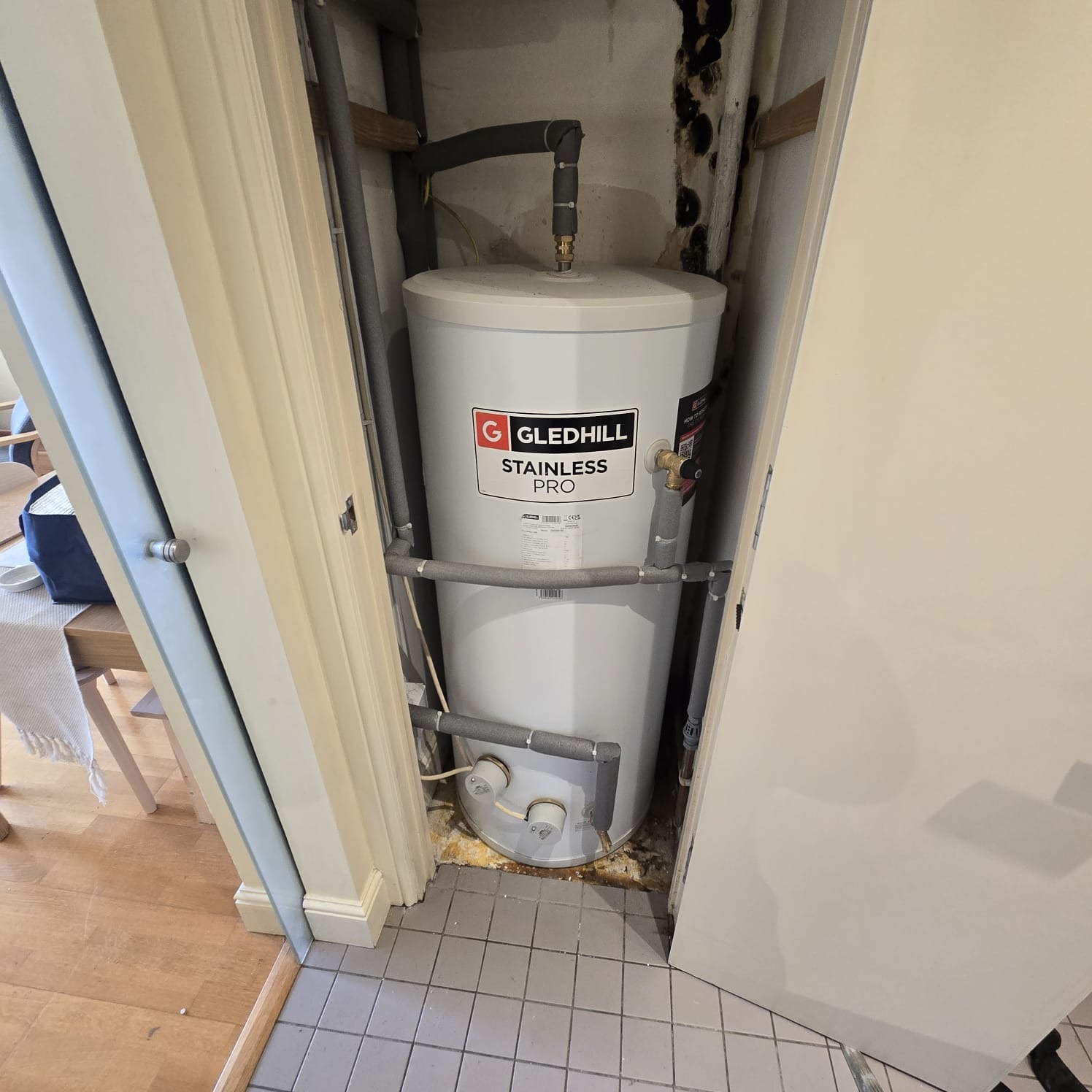
Photographs from real FHP Heating jobs — no stock imagery. See the full gallery.
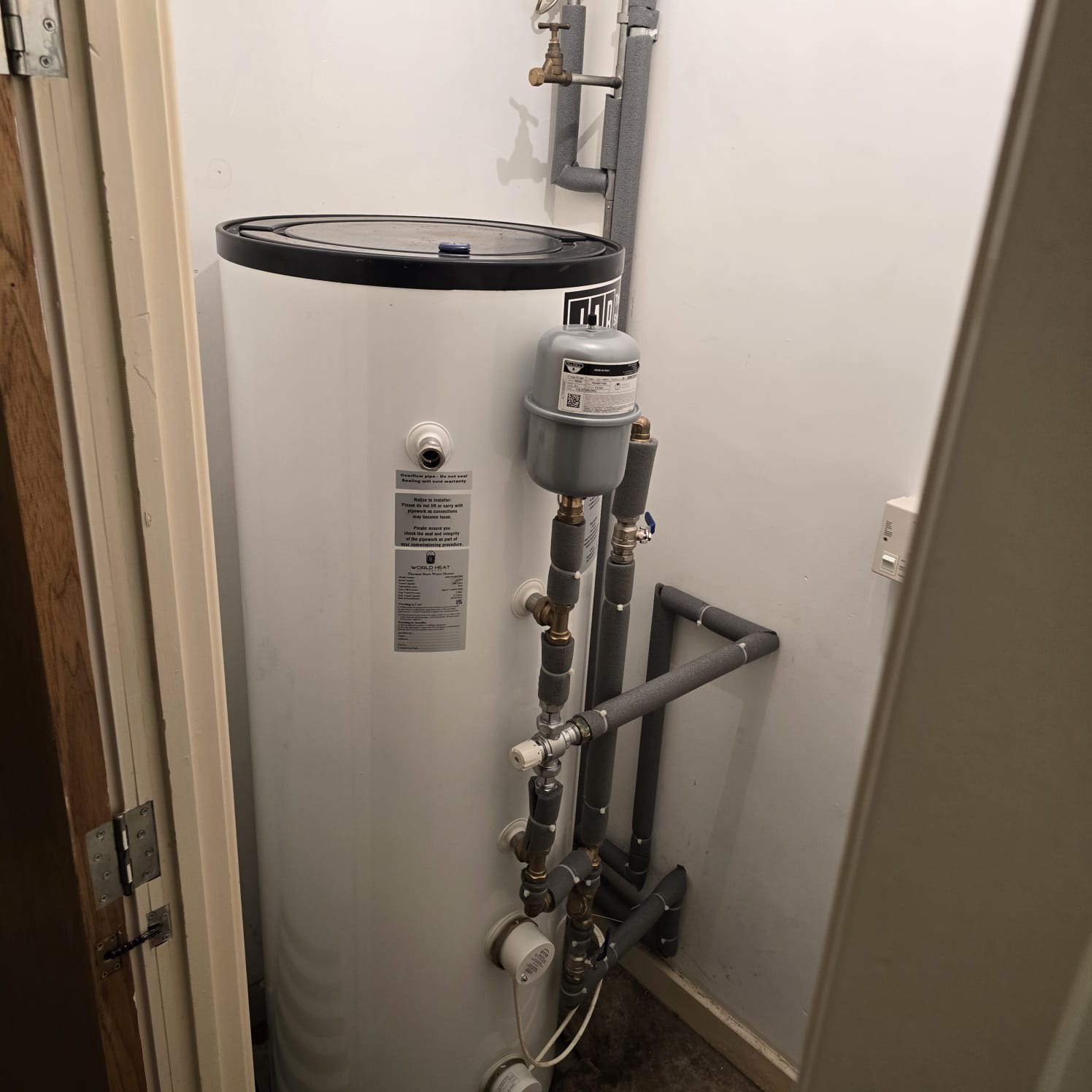
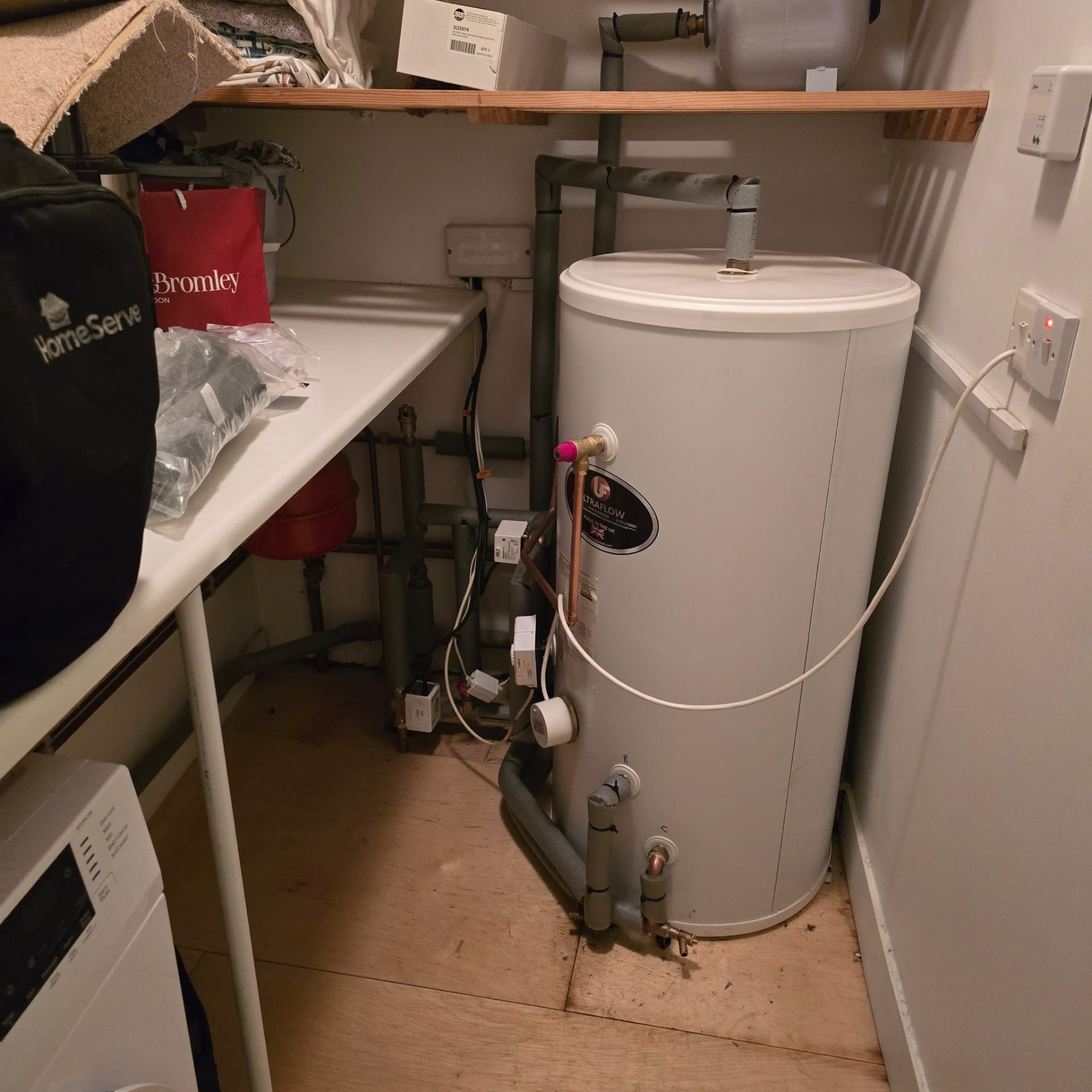
Pipework, radiators, cylinders and the situations that change the design
Central heating installation covers a wide range of work, from adding two radiators off an existing system to designing a whole-house layout from a set of empty walls. What matters in every case is that the design is calculated, not copied from the last job.
Pipework, radiator sizing and heat loss
Heat loss is calculated per room from construction, glazing, insulation and exposure, and radiators are selected against that figure rather than matched to whatever size was already fitted. Pipework is sized to carry the flow rate each circuit needs — undersized pipe is one of the most common reasons a system heats slowly or unevenly.
First-fix pipework is run in copper or plastic through floor voids, joists and stud walls before plaster and flooring go back, and is pressure tested before it is covered. Where a system is being extended rather than replaced, the existing pipework's capacity is checked before new radiators are added to it.
- Room-by-room heat loss calculation
- Radiator sizing to match calculated output
- First-fix pipework in copper and plastic
- Pressure testing before floors and walls are closed
- Capacity checks before extending existing circuits
- Microbore and single-pipe system replacement
TRVs, zoning and controls
Thermostatic radiator valves let individual rooms be set to different temperatures, but the room holding the main thermostat is left without one so the system still has a genuine call for heat. Zone valves split heating and hot water, or upstairs and downstairs, so each runs only when it is actually needed.
Programmers and thermostats — including smart controls where wanted — are set up to work with the zoning rather than against it, so the boiler is not firing to heat a zone nobody has asked for.
- TRVs fitted room by room
- Zone valves for heating and hot water
- Programmers and room thermostats
- Smart control integration where required
- Weather compensation on suitable systems
- Correct thermostat siting away from radiators and draughts
Cylinders, system cleansing and inhibitor
Unvented cylinders store hot water at mains pressure and are notifiable installations requiring G3 qualification, which FHP Heating holds alongside Water Regulations certification. Safety devices — pressure and temperature relief, expansion vessels — are fitted and tested as part of every unvented installation.
Whether the system is new or being extended, it is chemically cleansed before commissioning and dosed with a corrosion inhibitor afterwards. New pipework and radiators corrode exactly the same as old ones without that protection, and it is far cheaper to do at installation than to power flush a corroded system a few years later.
- Unvented (G3) cylinder installation and connection
- Vented cylinder installation and replacement
- Chemical system cleansing before commissioning
- Inhibitor dosing on completion
- Expansion vessel and pressure relief testing
- Water Regulations compliant mains connections
First-fix, second-fix, extensions and commercial work
First-fix covers pipework, radiator brackets and cable containment while walls and floors are open; second-fix covers radiators, valves, controls and cylinder connection once decoration is underway. Extensions and refurbishments often need both stages sequenced around other trades, and we work in with builders, plasterers and electricians on site to keep the programme moving.
Commercial installations bring plant room access, larger heat loads, ventilation requirements and the need to work around trading hours. FHP Heating carries £2 million public liability insurance and installs heating systems for both domestic and commercial premises across Essex.
Central Heating Installation questions,
answered straight
Anything not covered here, ring Dean Sone on 07534 068551. The phone is answered 24 hours a day.
How much does a central heating installation cost in Essex?
It depends on the number of radiators, pipework routes, whether a cylinder is involved, and whether the system is being extended or fully replaced. FHP Heating surveys the property, calculates heat loss, then gives one written fixed price before any work starts. Prices can vary by location.
How long does a full central heating installation take?
A whole-house system in an occupied property typically runs several days depending on radiator count and pipework routes, since floors and walls need to be opened and closed properly. Adding radiators to an existing system for an extension is usually quicker. The survey tells you which applies and we confirm the timescale in writing with the price.
Will you need to lift floors or chase walls?
In most whole-system installs, yes, for at least some of the pipework runs — that is what makes the system tidy and correctly routed rather than surface-clipped everywhere. We tell you at survey which areas will be affected and reinstate as we go.
What guarantee comes with a new central heating system?
Every installation carries our 12-month workmanship guarantee. Where the job includes a new boiler, that appliance carries its own manufacturer warranty of 5, 7 or 10 years, registered on completion.
How long should a properly installed system last?
Radiators and pipework installed to a correct design, cleansed and inhibited on completion, and serviced normally should give decades of reliable service. What shortens that is usually skipped cleansing, incorrect sizing, or a system left without inhibitor protection.
Can you add radiators to an existing system for an extension?
Yes, provided the existing pipework and boiler have the capacity to carry the extra load, which we check at survey. Where capacity is short, we will tell you honestly rather than fit a radiator that will never heat properly.
Do you install unvented hot water cylinders?
Yes. FHP Heating holds G3 unvented cylinder qualification and Water Regulations certification, so cylinder installation, connection and the required safety devices are fitted and tested compliantly.
Is my old single-pipe or microbore system worth keeping?
Usually not if you want reliable, evenly heated rooms. Single-pipe and microbore systems struggle to support modern radiator outputs and TRVs properly, and replacement pipework is often the single biggest improvement you can make to how a house heats.
Do you carry out central heating installations for landlords and commercial premises?
Yes, we install and extend heating systems for rented properties and commercial premises across Essex, and carry £2 million public liability insurance for commercial work.
Which areas of Essex do you cover for central heating installation?
FHP Heating is based in Corringham and installs central heating systems across Brentwood, Billericay, Chelmsford, Rayleigh, Benfleet, Leigh-on-Sea, Hadleigh, Basildon and the surrounding towns. The phone is answered 24 hours a day, seven days a week on 07534 068551.
Central Heating Installation across Essex
FHP Heating is based at 116 Lampits Hill, Corringham, and covers the surrounding Essex towns daily.
Related services
Most jobs touch more than one part of the system. These are the services customers most often book alongside central heating installation.
- Boiler InstallationClean installs with 5, 7 or 10-year manufacturer warranties.
- Power FlushingClears sludge so radiators heat evenly again.
- Landlord Gas Safety Certificates (CP12)Compliant CP12s for landlords and agents.
- Gas Engineer / Gas Safe ServicesGas Safe registered work on appliances, pipework and controls.
Get a fixed price for your central heating installation
Tell us the property, the rooms involved and what is not heating properly. Dean will arrange a survey, calculate heat loss room by room, and put one written price in front of you before a single pipe is cut.
- Gas Safe Register No. 6075146
- £2 million public liability
- 12-month workmanship guarantee