
Power Flushing in EssexThat Actually Fixes Cold RadiatorsAnd Protects Your Boiler Warranty
Radiators cold at the bottom, a boiler that clatters when it fires, and water that runs black off the bleed key are all the same problem — magnetite sludge choking your system. FHP Heating flushes it out with a pump-driven power flush, dosed cleansing chemicals and a magnetic filter, then proves the result on every radiator before we leave.
Gas Safe Register No. 6075146 · 22 years in the trade · 12-month workmanship guarantee on every flush.
6075146
Gas Safe Register number
22 years
In the heating and plumbing trade
12 months
Workmanship guarantee on every job
£2 million
Public liability insurance
24/7
Phone answered, seven days a week
Cleaning a heating system from the inside, radiator by radiator
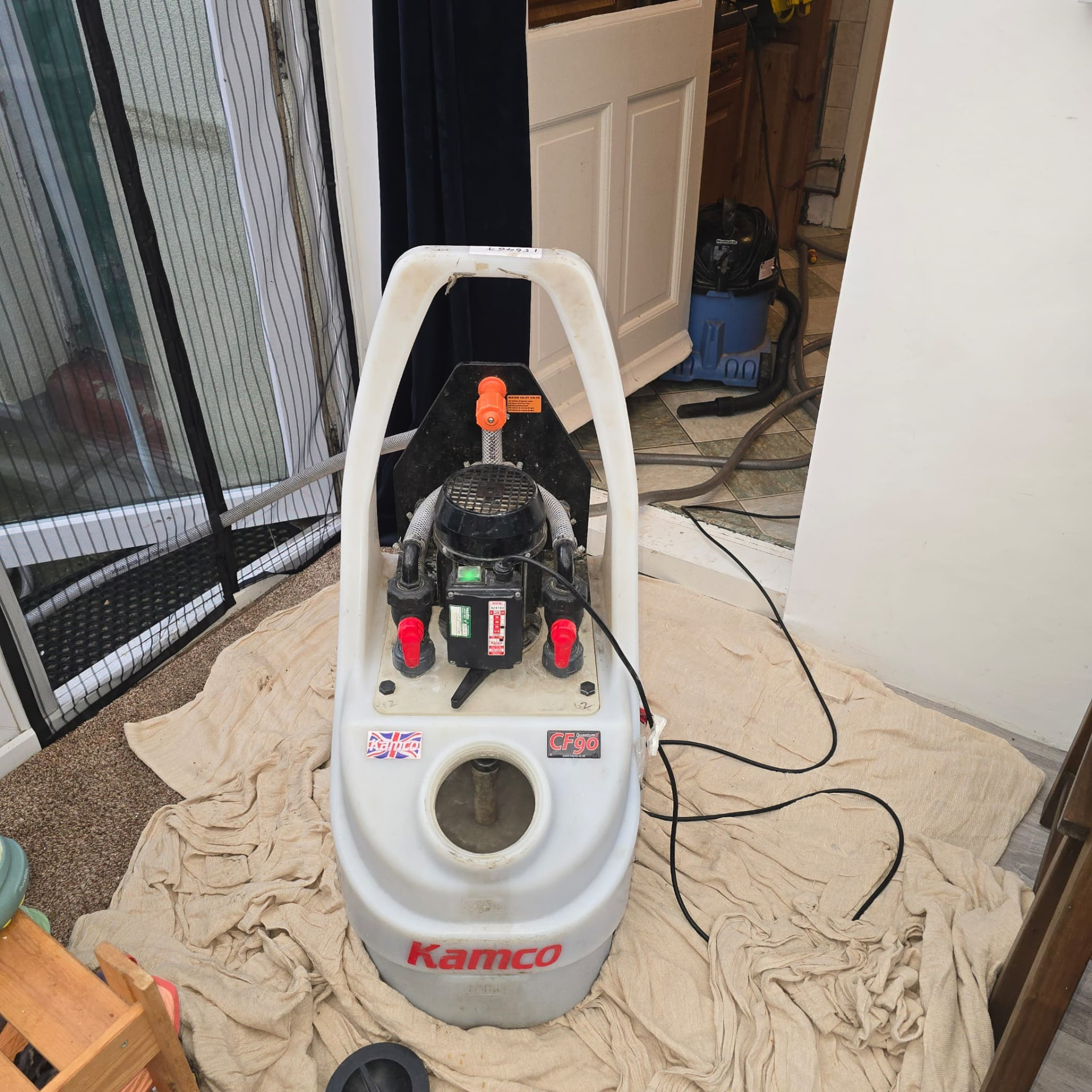
Power flushing is a pump-driven cleaning process that forces high-flow, low-pressure water and cleansing chemicals through your radiators and pipework to break up and remove magnetite sludge, scale and debris that has built up over years of use. FHP Heating carries out power flushing on domestic and commercial systems across Essex, either as a standalone job or ahead of a new boiler installation.
What the work actually involves
Connecting a flushing pump to the system, isolating and flushing each radiator individually in reverse and forward flow, dosing the system with a cleansing chemical to break down sludge and limescale, circulating and agitating radiators to dislodge trapped debris, then rinsing until the water runs clear. The system is finished with a corrosion inhibitor and, where one is not already fitted, a magnetic filter to catch what circulates afterwards.
Who it is for
Homeowners with radiators that are cold at the bottom or need bleeding every few weeks, anyone whose boiler is noisy, kettling or losing efficiency, landlords bringing an older property up to a lettable standard, and anyone about to have a new boiler fitted onto a system that has never been cleansed.
When it is needed
When radiators heat unevenly across a room or a house, when the boiler short-cycles or bangs on ignition, when water from a bled radiator or drained system is black or gritty, when a system has run for a decade or more without ever being cleansed, or when a survey ahead of a new boiler shows sludge in the existing pipework.
Why a Gas Safe engineer matters here
Power flushing involves working on gas appliances, sealed system components and, on some jobs, unvented cylinders, all of which sit under Gas Safe and Water Regulations rules. It is also a job where doing it badly causes damage: incorrect flow rates can dislodge scale that then blocks a narrow radiator valve or heat exchanger elsewhere, turning a cleaning job into a repair job. FHP Heating is registered under 6075146 and holds G3 unvented cylinder and Water Regulations qualifications for the cylinder-connected work that some flushes require.
Ignoring cold radiators does not save you money, it just moves the cost
A sludged system does not fail all at once. It gets steadily less efficient, the boiler works harder to compensate, and by the time someone calls an engineer the fault list usually includes a pump, a valve and a heat exchanger that a flush years earlier would have kept clean.
Gas burned heating sludge, not rooms
Magnetite is a poor conductor of heat. Once it settles at the bottom of a radiator, the boiler keeps firing to reach the set temperature while the top half of every radiator does the actual work — burning gas for heat that never leaves the pipework.
Circulator pumps failing early
Sludge is abrasive. It wears pump bearings and seals, and a pump replacement on a system that is still full of the debris that killed the last one is a repair that will happen again.
Heat exchangers blocking
Fine debris that survives an unflushed system eventually reaches the boiler's heat exchanger, where narrow waterways block first. This is one of the most common causes of boiler breakdown on systems over eight to ten years old.
Diverter and zone valves sticking
Grit circulating through motorised valves stops them seating properly, which shows up as heating running when it should not, or hot water and heating fighting each other on a combi.
A new boiler fitted onto an old fault
Fitting a new appliance onto a system that has never been cleansed is one of the fastest ways to void a manufacturer warranty. The sludge that was in the old boiler simply migrates into the new one's narrower waterways.
Corrosion accelerating without inhibitor
Magnetite is a symptom of internal corrosion, and once inhibitor has broken down or was never dosed correctly, that corrosion continues regardless of how new any single component is. Flushing without redosing inhibitor just resets the clock to zero.
Mistakes that make the bill bigger
- Bleeding radiators repeatedly for months instead of asking why air keeps building up, which is often a symptom of sludge, not a fault with the radiator.
- Fitting a new boiler without flushing the existing system first, then finding a warranty claim declined because the fault traces to system debris.
- Using a bottle of shop-bought cleaner and a garden hose instead of a proper pump-driven flush, which moves sludge around without actually removing it.
- Skipping the magnetic filter after a flush, so the system is clean for a few months and then starts collecting sludge again with nothing to catch it.
- Not redosing inhibitor after a flush, leaving bare metal exposed to corrode and produce fresh magnetite within a year or two.
- Assuming a noisy or inefficient boiler needs replacing when the actual fault is a system that has never been cleansed.
Five stages from diagnosis to a system that heats evenly
The sequence exists so the flush actually clears the fault rather than just moving sludge from one radiator to another. Every stage is explained before we start, and you see the water clear with your own eyes before we finish.
-
STEP 01
Inspection and diagnosis
We check radiators for cold spots, test system pressure and water condition, inspect the boiler for signs of sludge-related strain, and confirm a power flush is the right fix rather than a mechanical fault elsewhere.
-
STEP 02
Fixed price agreed
You get a written fixed price covering the whole system before any work starts — how many radiators, whether a magnetic filter is included, and what condition the pipework is in.
-
STEP 03
Pump-driven flush
The flushing pump is connected to the system and each radiator is isolated and flushed individually in reverse flow to dislodge settled sludge, using cleansing chemicals to break down scale and magnetite as the flush progresses.
-
STEP 04
Rinse and clear
Water is circulated and rinsed through every radiator until it runs clear rather than black or grey, with particular attention to radiators that were coldest or worst affected at the start.
-
STEP 05
Inhibitor, filter and proof of result
The system is dosed with corrosion inhibitor, a magnetic filter fitted if not already present, and every radiator checked with a thermal check to prove even heat top to bottom before we call the job finished.
What a proper power flush buys you
The result of a flush is not visible in the pipework — it shows up in radiators that heat evenly, a boiler that runs quieter, and gas bills that reflect heat actually delivered to rooms.
Even heat across every radiator
Cold bottoms and cold corners disappear because the sludge causing them has been removed, not just redistributed.
A quieter, less strained boiler
Kettling, banging and short-cycling caused by restricted flow through a sludged heat exchanger settle down once the system is clean.
Warranty protection on a new boiler
A cleansed system with inhibitor and a magnetic filter is exactly what manufacturers ask for before they will honour a claim in later years.
Lower gas use for the same comfort
Heat reaches the room instead of being absorbed and wasted by sludge, so the boiler does not need to run as long or as hard to hit the thermostat setting.
Longer life from pumps and valves
Removing the abrasive debris that wears bearings and seats extends the working life of the circulator pump, diverter valve and zone valves.
One fixed price for the whole system
The price agreed after inspection covers every radiator on the system, not a per-radiator surprise once the pump is already connected.
Power Flushing jobs completed across Essex
Photographs from real FHP Heating jobs — no stock imagery. See the full gallery.
Flushing methods, chemicals and what magnetite actually is
Not every dirty system needs the same treatment. A lightly sludged system with good flow is a different job to a heavily corroded fifteen-year-old system with narrow microbore pipework, and the method has to match the problem.
Pump-driven power flush vs chemical cleanse vs magnetic filtration
A power flush uses a dedicated pump to push water through the system at high flow and controlled pressure, reversing flow through each radiator in turn to physically dislodge settled sludge that a standard circulator pump could never move. It is the method for systems with visible cold spots, black water, or radiators that need bleeding repeatedly.
A chemical cleanse uses a cleansing agent circulated by the system's own pump, sometimes over a longer dwell time, to break down lighter deposits and scale without the mechanical force of a power flush. It suits systems that are moderately dirty rather than heavily blocked, or as the chemical stage that runs alongside a power flush for a thorough job.
Magnetic filtration is not a one-off clean but ongoing protection — a filter fitted to the system that captures magnetite as it forms so it never gets the chance to settle in radiators again. We fit one as standard after a flush, because a flush without ongoing filtration is a temporary fix on a system that will keep producing debris.
- Pump-driven power flush per radiator
- Chemical cleanse for lighter deposits
- Combined flush and chemical treatment
- Magnetic filter fitted post-flush
- Descaling for hard water scale
- Microbore and combi system flushing
What magnetite is and why it forms
Magnetite is black iron oxide sludge produced when steel radiators and pipework corrode internally, which happens continuously in any system without adequate corrosion inhibitor. It settles at the lowest points of radiators — which is why the classic symptom is heat at the top and cold at the bottom — and circulates as fine grit that wears pumps, blocks valves and eventually reaches the boiler's heat exchanger.
Cleansing chemicals used during a flush are formulated to break down magnetite and scale so it can be carried out in suspension and rinsed away, rather than simply loosened and left to resettle further along the system. Once the system is clean, inhibitor is dosed to slow the corrosion that produces magnetite in the first place, and this needs redosing periodically or after any drain-down.
Before and after checks
Before a flush, we record which radiators are cold and where, check system pressure, test the existing water for sludge content, and inspect the boiler for signs sludge has already reached it, such as kettling or reduced heat output relative to its rated size.
After a flush, every radiator is checked by hand or thermal imaging to confirm even heat from top to bottom, the system water is tested for clarity and inhibitor concentration, and the boiler is checked for quieter, smoother operation. This before-and-after comparison is what proves the flush worked, rather than taking it on trust.
When it is needed before a new boiler, and warranty implications
Any system that has been running for years without a flush, has visible sludge on drain-down, or shows cold spots and black water should be cleansed before a new boiler goes on. New heat exchangers have narrower waterways than old cast-iron ones and block far more easily, so fitting a new appliance onto an unflushed system is one of the most common causes of early failure.
Manufacturer warranties generally require the system to be chemically cleansed and dosed with inhibitor, and increasingly require a magnetic filter, as a condition of cover. Skipping this step to save time on installation day risks a declined claim years later when it matters most. FHP Heating includes a full cleanse as standard on every boiler installation, and recommends a dedicated power flush where the survey shows the system is already heavily sludged.
Power Flushing questions,
answered straight
Anything not covered here, ring Dean Sone on 07534 068551. The phone is answered 24 hours a day.
How much does power flushing cost in Essex?
The price depends on the number of radiators, how sludged the system is, and whether a magnetic filter is included. FHP Heating inspects the system first, then agrees one written fixed price before any work starts. Prices can vary by location.
How long does a power flush take?
A typical domestic system with eight to twelve radiators takes the best part of a day, since each radiator is flushed individually in reverse flow. Heavily sludged systems or those with a lot of radiators can run longer, which we confirm at the inspection stage.
How do I know if I need a power flush?
The main signs are radiators cold at the bottom while hot at the top, radiators needing bleeding every few weeks, a boiler that is noisy or kettling, black or gritty water when you bleed a radiator, or uneven heating between rooms on the same system.
Is power flushing the same as a chemical flush?
No. A power flush uses a dedicated pump to force water through each radiator at high flow, which physically dislodges settled sludge. A chemical cleanse uses the system's own pump with a cleansing agent to break down lighter deposits. We often combine both for a thorough result, and recommend the right approach after inspecting the system.
What guarantee comes with a power flush?
Every job FHP Heating completes carries our 12-month workmanship guarantee. Where a magnetic filter and inhibitor are fitted as part of the flush, that protection continues for as long as the filter is serviced and the inhibitor level is maintained.
How often should a system be power flushed?
There is no fixed interval for every property, but a system that has never been flushed, is over eight to ten years old, or is showing cold spots should be assessed. A system with a magnetic filter and correctly dosed inhibitor that is serviced annually should need far less frequent full flushing.
Do I need a power flush before a new boiler?
Often, yes. If your existing system has never been cleansed, shows cold radiators or black water, or you are converting from an older boiler, flushing beforehand protects the new heat exchanger and keeps the manufacturer warranty valid. We assess this at survey and tell you plainly whether your system needs it.
Will a power flush damage old radiators or pipework?
A correctly controlled power flush is designed to remove sludge without damaging sound pipework or radiators. Very old, already-leaking or severely corroded pipework can occasionally reveal a pre-existing weak point once flow is restored, which is why we inspect the system's condition before starting and flag any concerns up front.
Can you power flush a system in an emergency, and are you available out of hours?
Power flushing itself is planned rather than emergency work, but if a sludged system is causing no heat or hot water, call us any time — the phone is answered 24 hours a day, seven days a week, and we will assess whether the immediate fault needs a repair first, with the flush scheduled to follow.
Which areas of Essex do you carry out power flushing in?
FHP Heating is based in Corringham and carries out power flushing across Brentwood, Billericay, Chelmsford, Rayleigh, Benfleet, Leigh-on-Sea, Hadleigh, Basildon and the surrounding towns.
Power Flushing across Essex
FHP Heating is based at 116 Lampits Hill, Corringham, and covers the surrounding Essex towns daily.
Related services
Most jobs touch more than one part of the system. These are the services customers most often book alongside power flushing.
Get a fixed price for power flushing your system
Tell us what your radiators are doing — cold spots, noise, black water, constant bleeding — and Dean will arrange an inspection, confirm whether a power flush, chemical cleanse or both is the right fix, and put one written price in front of you before the pump goes on.
- Gas Safe Register No. 6075146
- £2 million public liability
- 12-month workmanship guarantee